Prism Kiosk
Client:
Blue Label Telecoms
Date:
2011 - 2012
Position:
Senior Designer at ...XYZ Design
Roles:
Concept development, Industrial design, Detailed mechanical design, Design for manufacture
Blue Label Telecoms (BLT) is the largest provider of prepaid service vouchers in sub-saharan Africa. Their current kiosks are located in malls and convenience stores across Southern Africa, servicing all ages and demographics. BLT wanted to boost their brand visibility and improve the customer experience when purchasing prepaid vouchers from their vending kiosks. This resulted in the redesign of their vending kiosk and user interface to align with BLT's future vision.
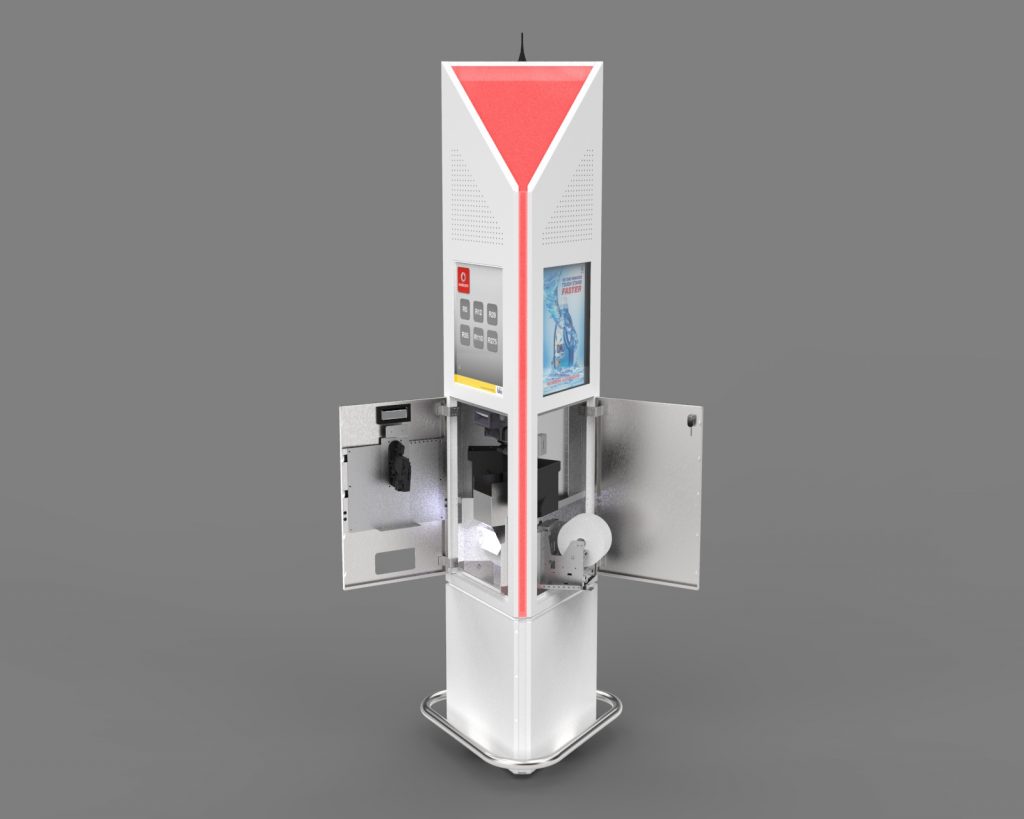
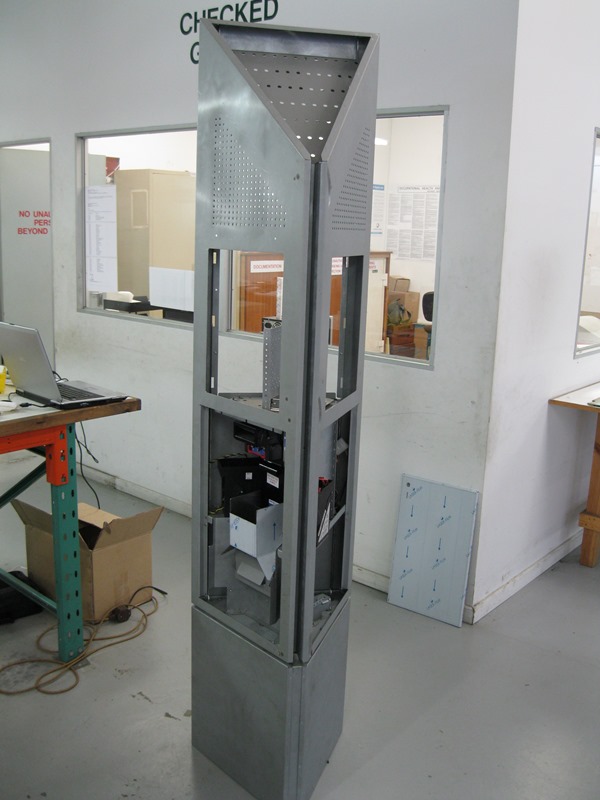
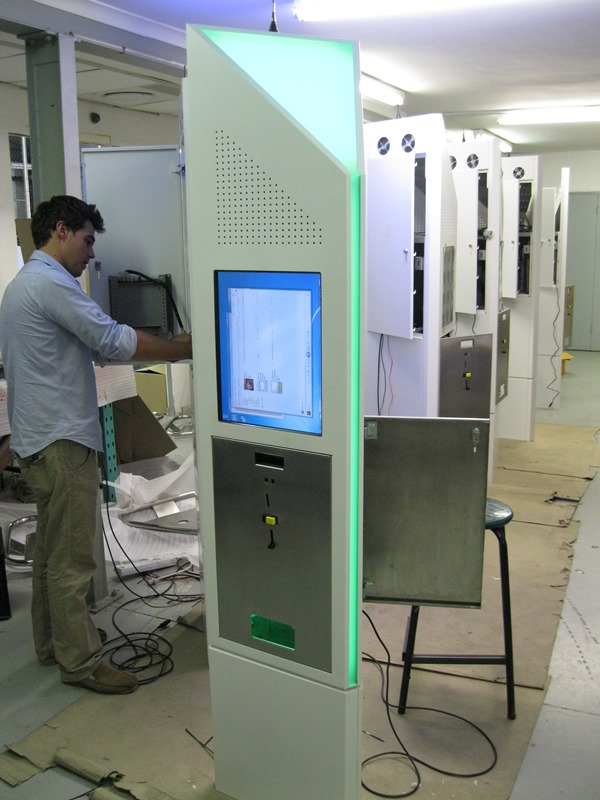
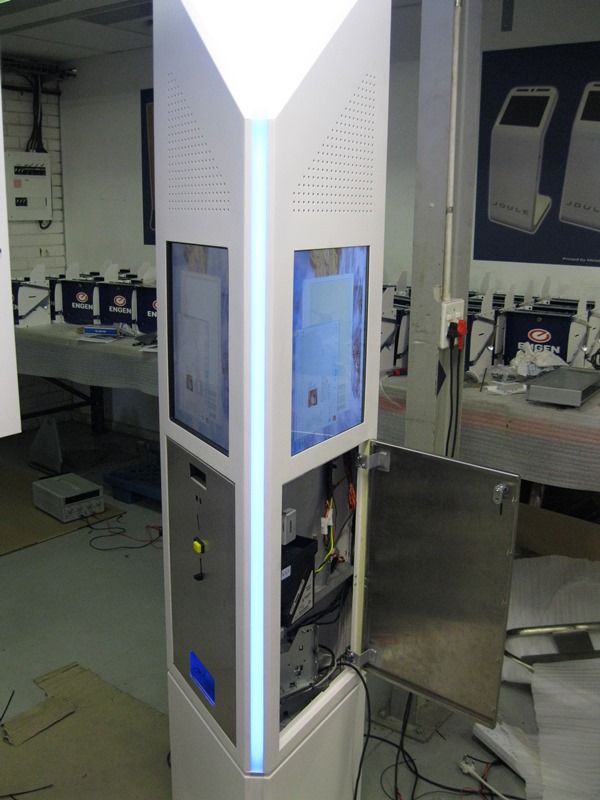
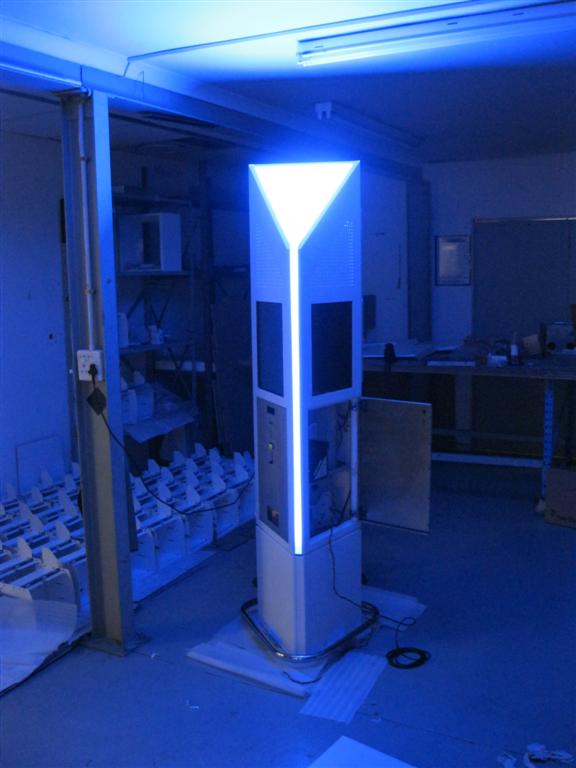
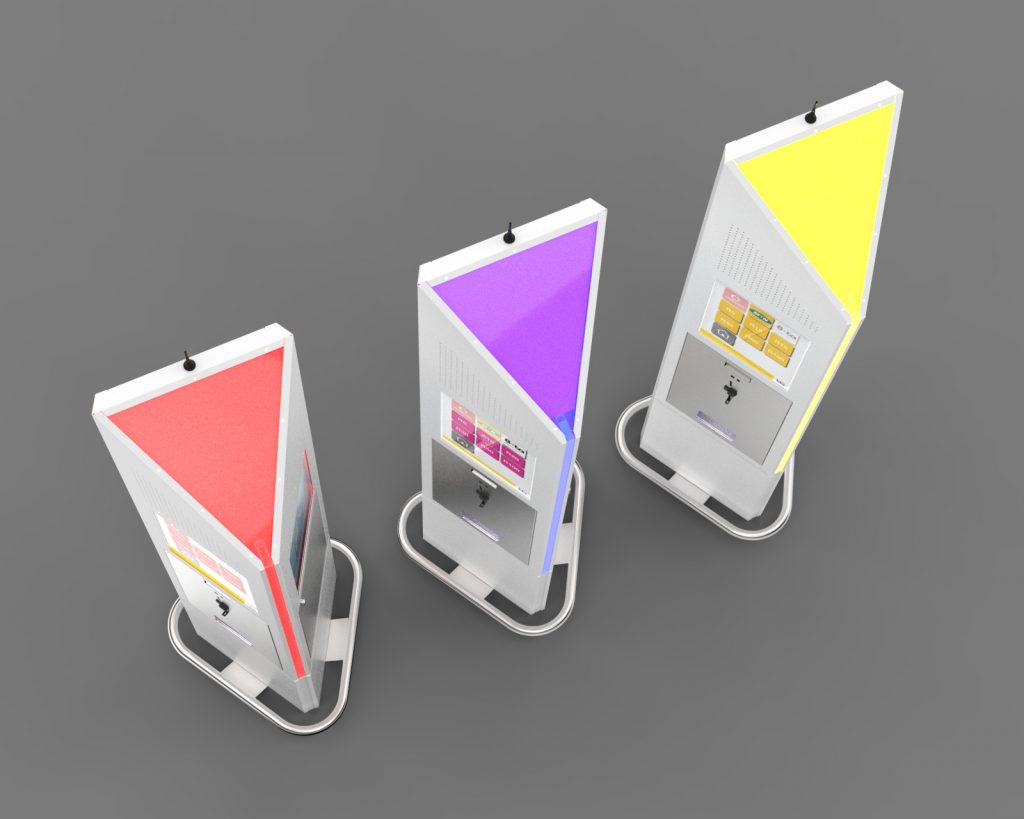
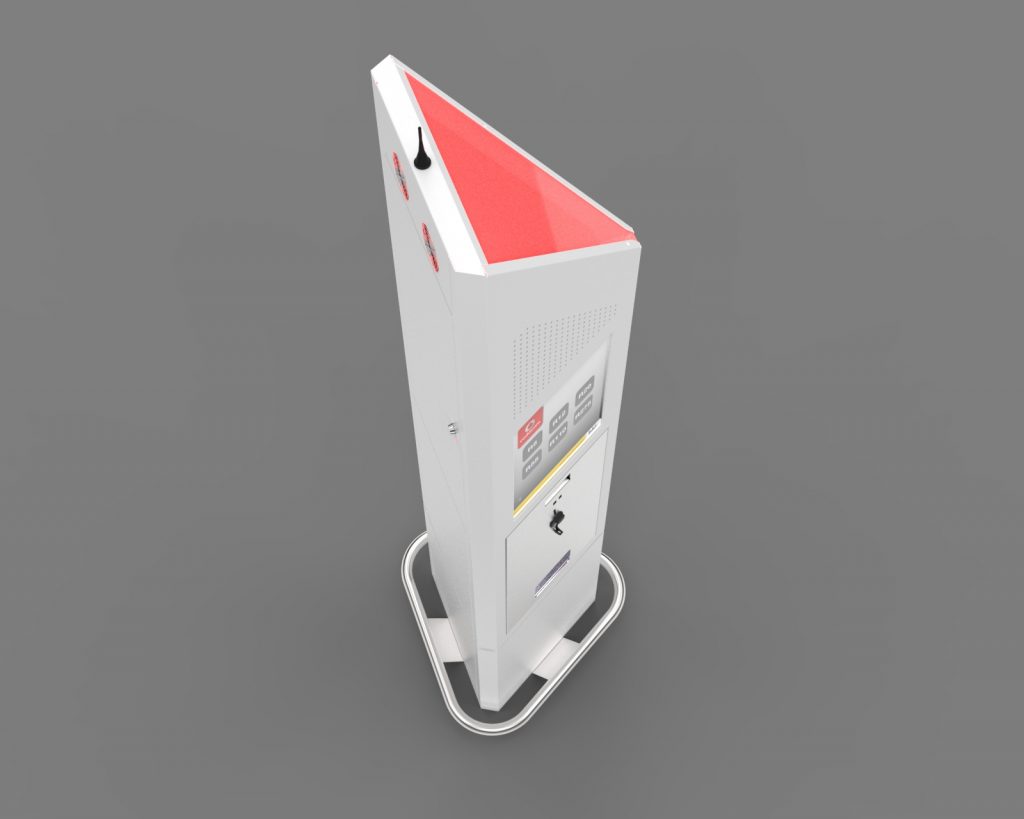
Through a rigorous concept development cycle a new proposition emerged in the dynamically unique form of the Prism Kiosk. The prism shape makes the kiosk immediately identifiable and combined with a touchscreen POS interface provided a solution for the future of BLT's offering. The kiosks unique triangular prism shape affords the opportunity for multiple interface panels, one side for actioning purchases on a touchscreen and the other for advertising the latest deals and services. The Prism Kiosk incorporated a lighting element and audio, that changed color and sound in relation to the products and services activated by the user, further augmenting the appeal of the kiosk for the brands on sale at the kiosk through BLT's services.
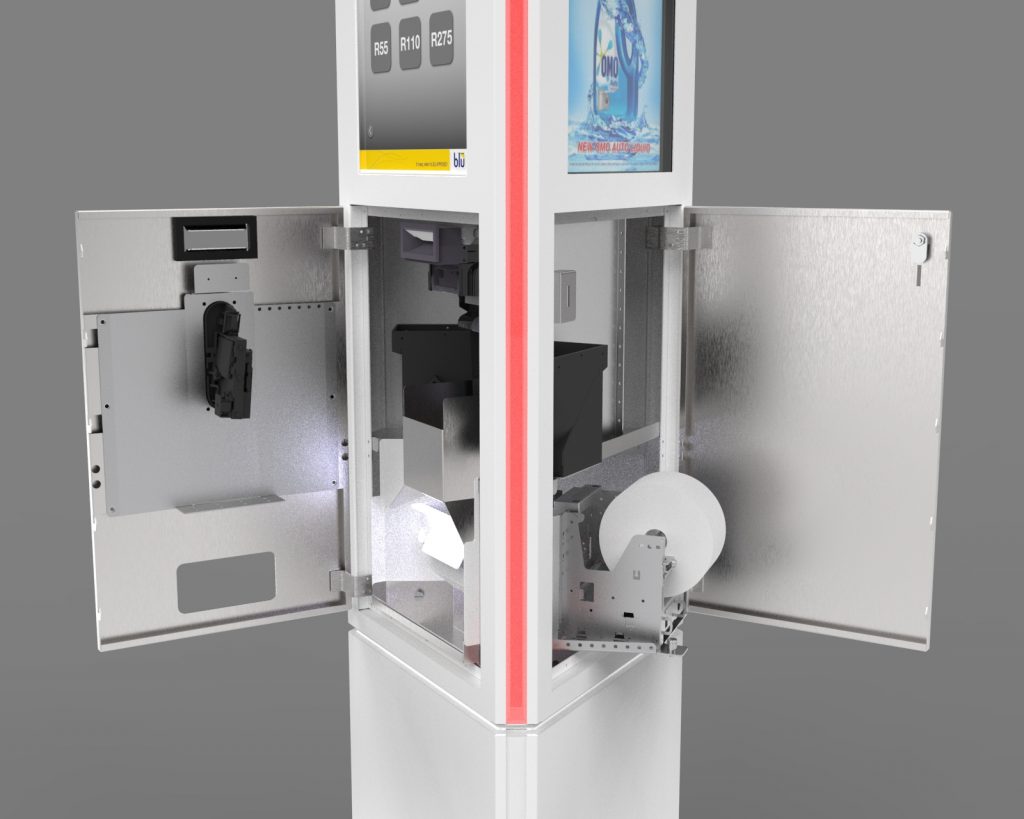
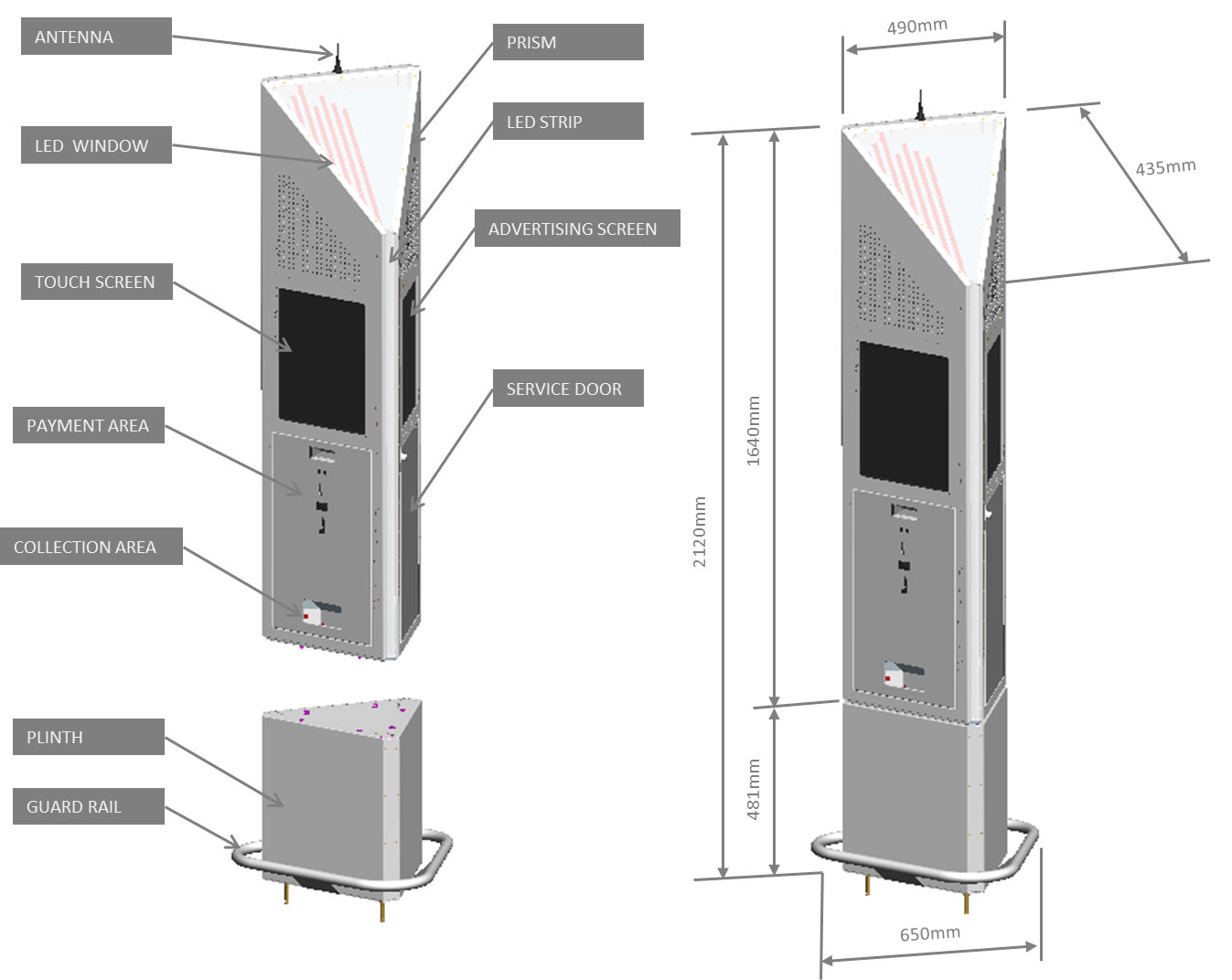
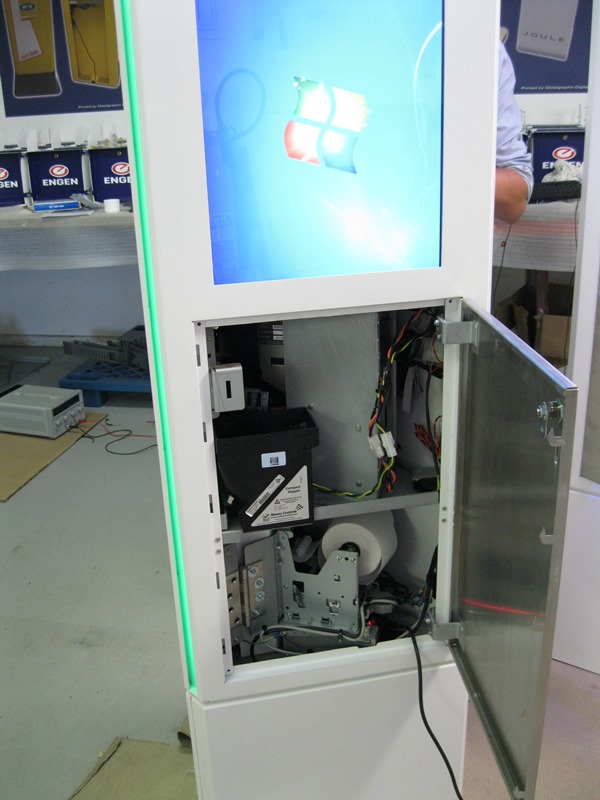
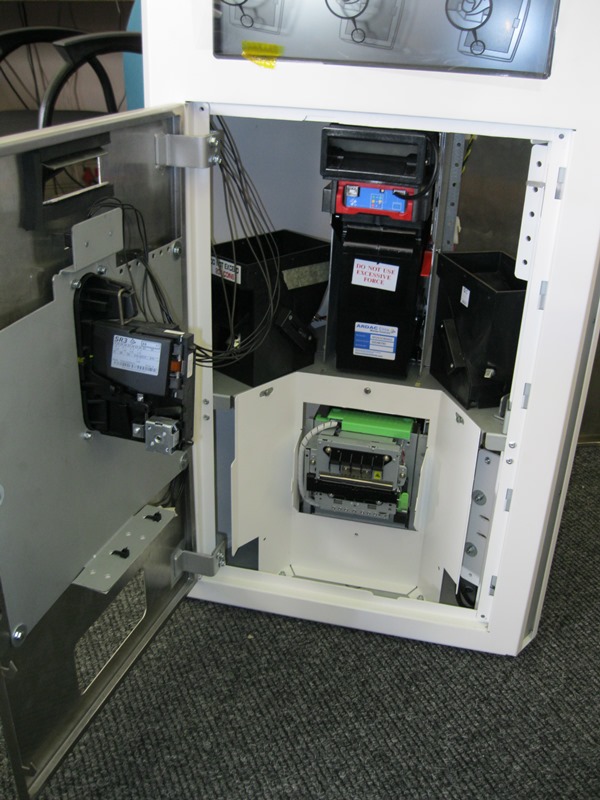
The Prism was not only designed to be visually appealing but also easy to service and conduct maintenance. The two service doors use a secure latching mechanism to prevent unauthorised access and vandalism and are accessed through a single lock on the one side of the kiosk. Once open the one side provides access to the money collection area where both coin and cash recyclers are located. The other door allows access to the receipt printer and for changing the printer paper. The printer swivels out on a special hinging mechanism for easy access. On the rear of the kiosk is an additional access hatch for more heavy duty maintenance such as the replacement of the computer components and related circuit boards. Because of the kiosks tall height the kiosk is transported in two pieces, the functional section and the plinth upon which it gets mounted. The plinth provides space for UPS's to be housed.
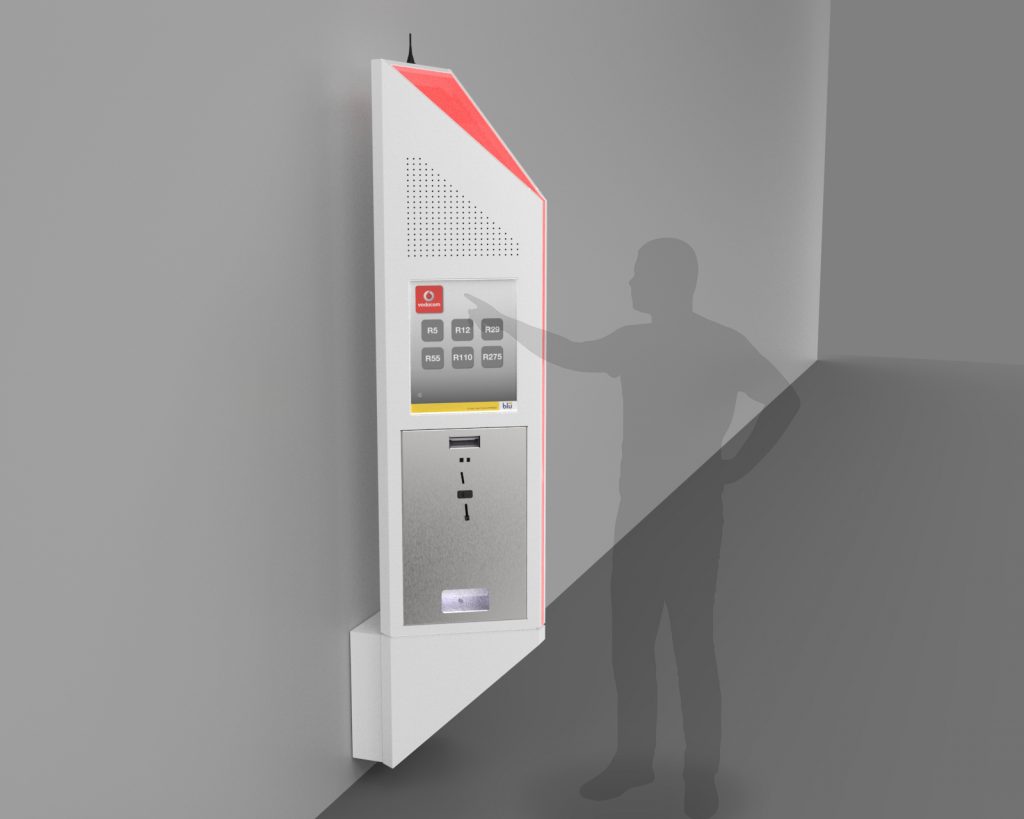
Further mounting options were designed for wall mounting the kiosk. The images below show the kiosk being built and tested in preparation for a pilot run.


Contributors: Byron Qually (Design director), Richard Perez (Operations), Roelf Mulder (Design support), Dewald Koegelenberg (Production and procurement), Peter Westerman (Production and procurement)