Engen OPT
Client:
Engen
Date:
2008 - 2009
Position:
Mid-level Designer at ...XYZ Design
Roles:
Industrial design, Detailed mechanical design, Design for manufacture
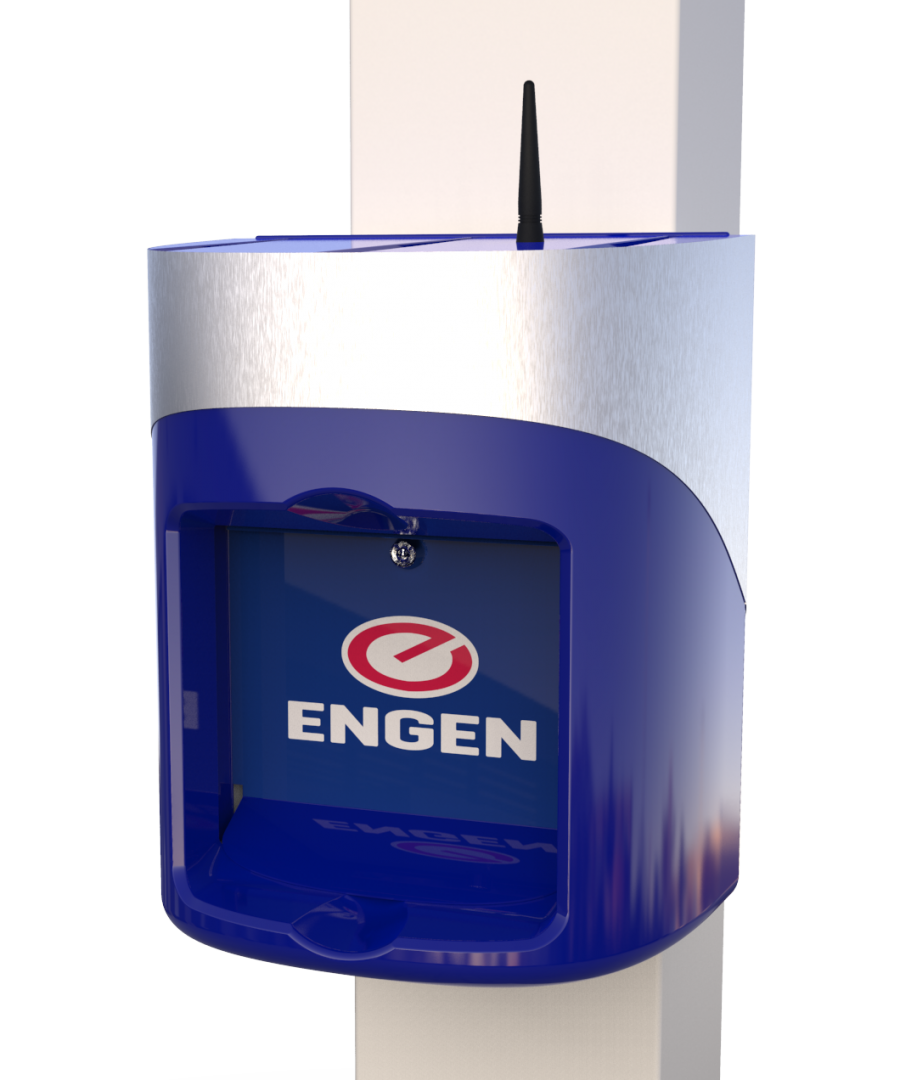
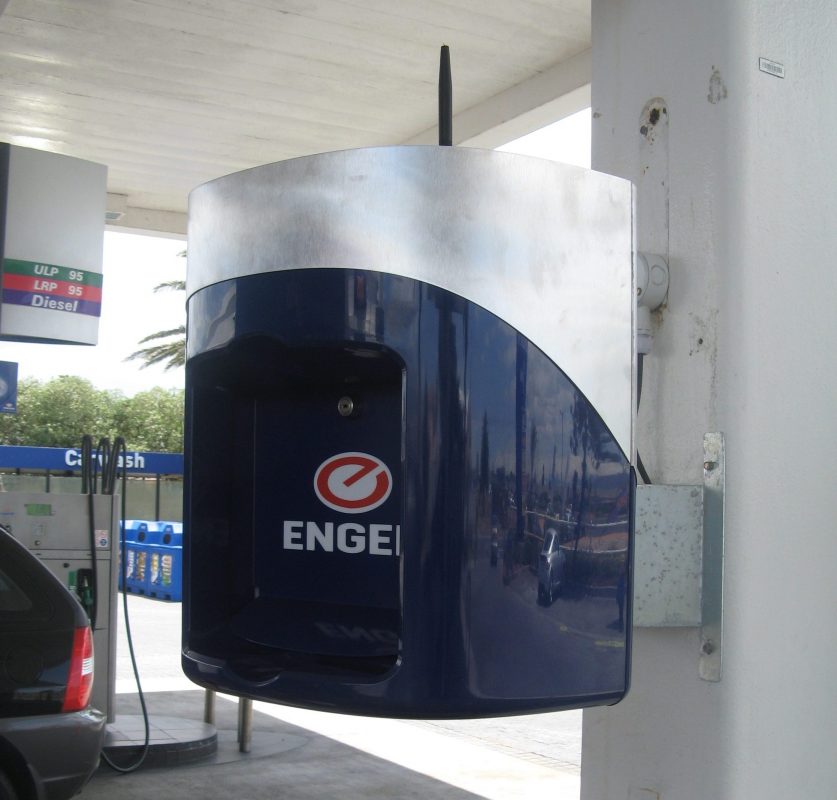
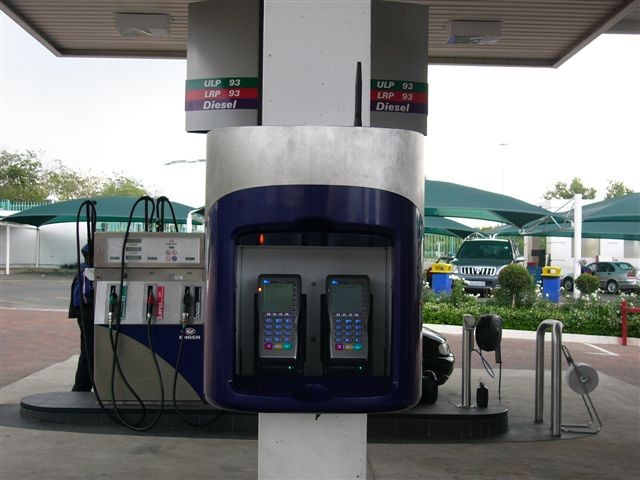
Engen required an outdoor housing for their wireless payment terminals that aligned with the rest of their forecourt furniture. The housing was to be rolled out to all major fueling stations countrywide in South Africa and had to meet certain environmental and quality standards.
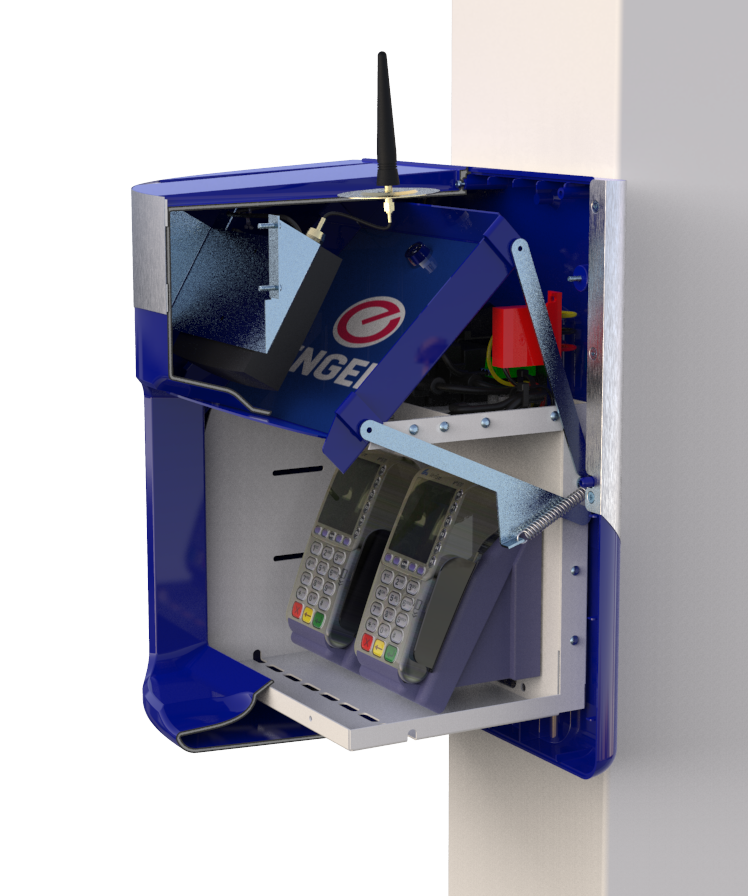
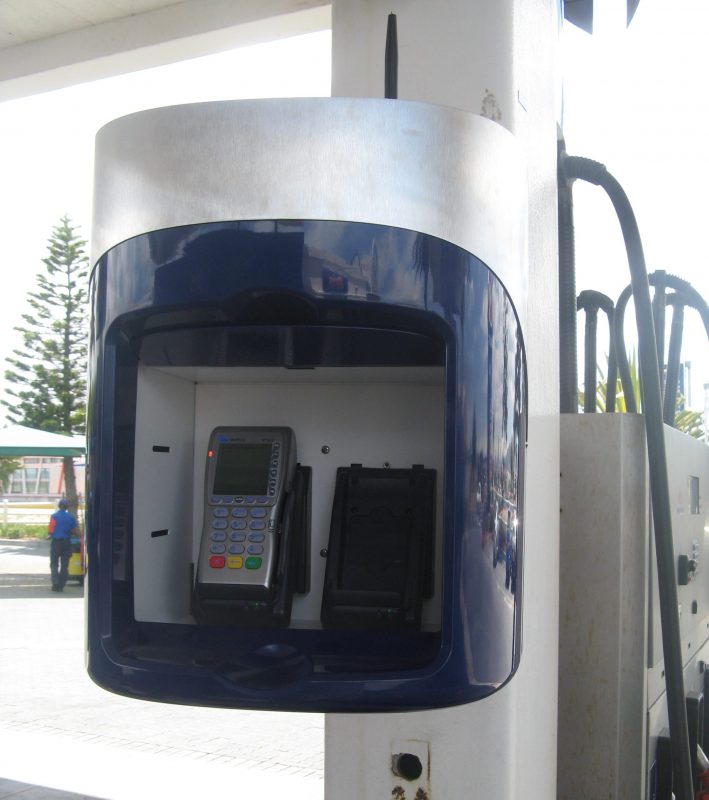
The payment terminals are used by the fueling attendants on the fueling stations' forecourt to accept payment from customers for fuel and other automotive consumables. Because the terminals are used outdoors, the housing needed to protect the payment terminals from rain and dust when not in use, while allowing easy access to retrieve them and put them back into the housing. A lockable door was required on the front of the housing to not only protect the payment terminals from the elements but also from theft during the early hours of the morning or when some fueling stations are not open for service.

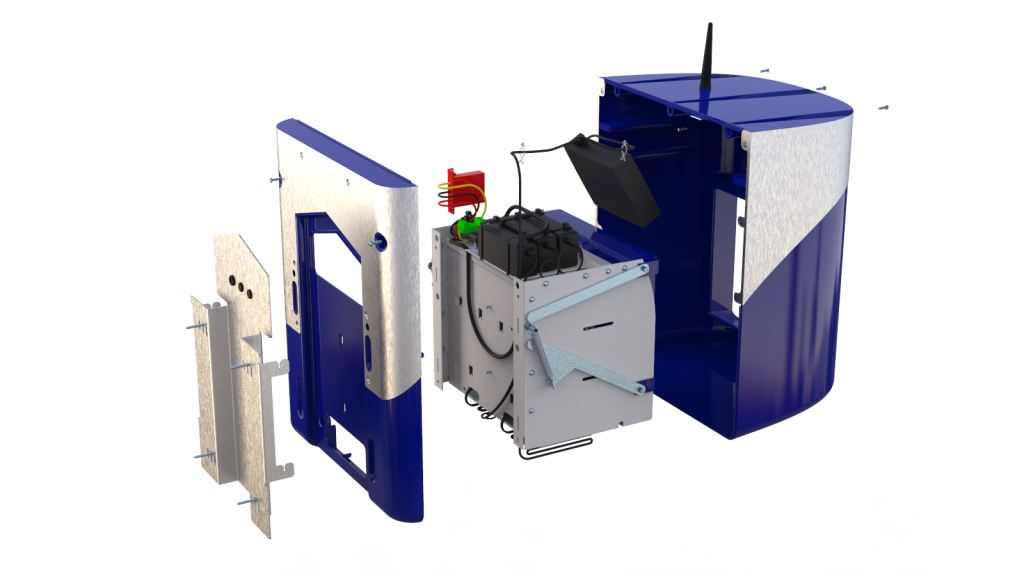
The OPT housing also needed to contain the power supplies for the payment terminals as well as wireless routers to boost the signal on the forecourt. Because of Engen's proliferation of fueling stations, thousands of housings were required in order to cover all locations countrywide. It was therefore economical to use a combination of injection moulding and sheet metal fabrication for the manufacture of the housings. The overall design of the OPT housings was matched to the current brand ID of Engen's forecourts, incorporating a rounded front form and a cosmetic stainless steel shroud that mirrored the curved profiles of the rest of the forecourt furniture. The housing was also kept as compact as possible to make the most efficient use of the materials without compromising usability. This meant that a novel hinge design needed to be designed in order for the door to open in a tight space while clearing all the internal components. Springs were incorporated into the door mechanism to hold the door in the open position.
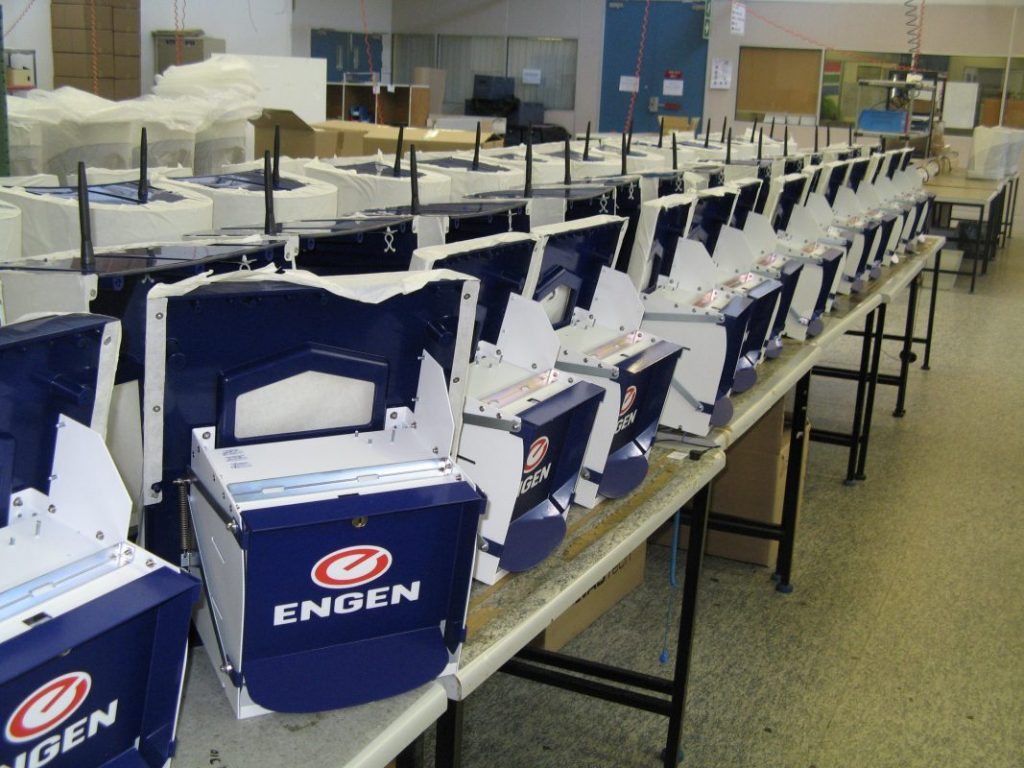
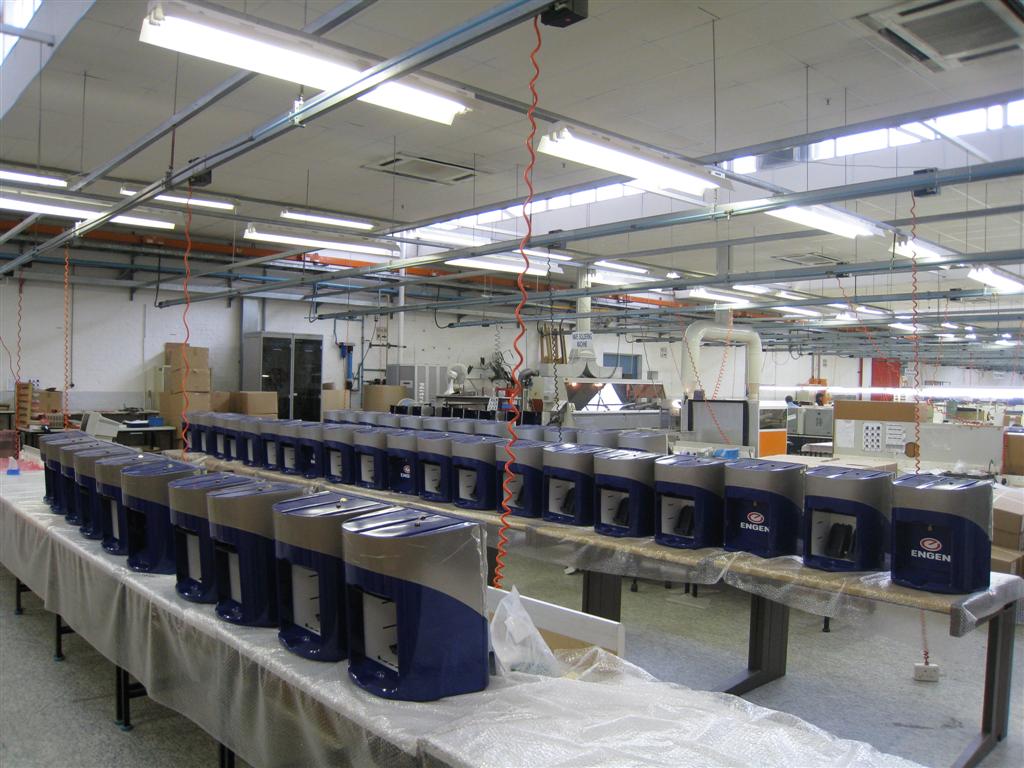
The OPT housings were also designed to be easily assembled on site. Following full assembly of enclosures and the electronics, the housings were delivered to each location with simple installation instructions. A mounting plate formed part of the enclosure design that the housing simply slotted onto. The housings where locked to the mounting bracket but means of screws from the inside of the enclosure. Further images of the housings in production and fitted on site can be seen below.


Contributors: Byron Qually (Design director), Richard Perez (Operations), Roelf Mulder and Vahid Monadjem (Design support), Hayley Bradnick and Dewald Koegelenberg (Production and procurement)